
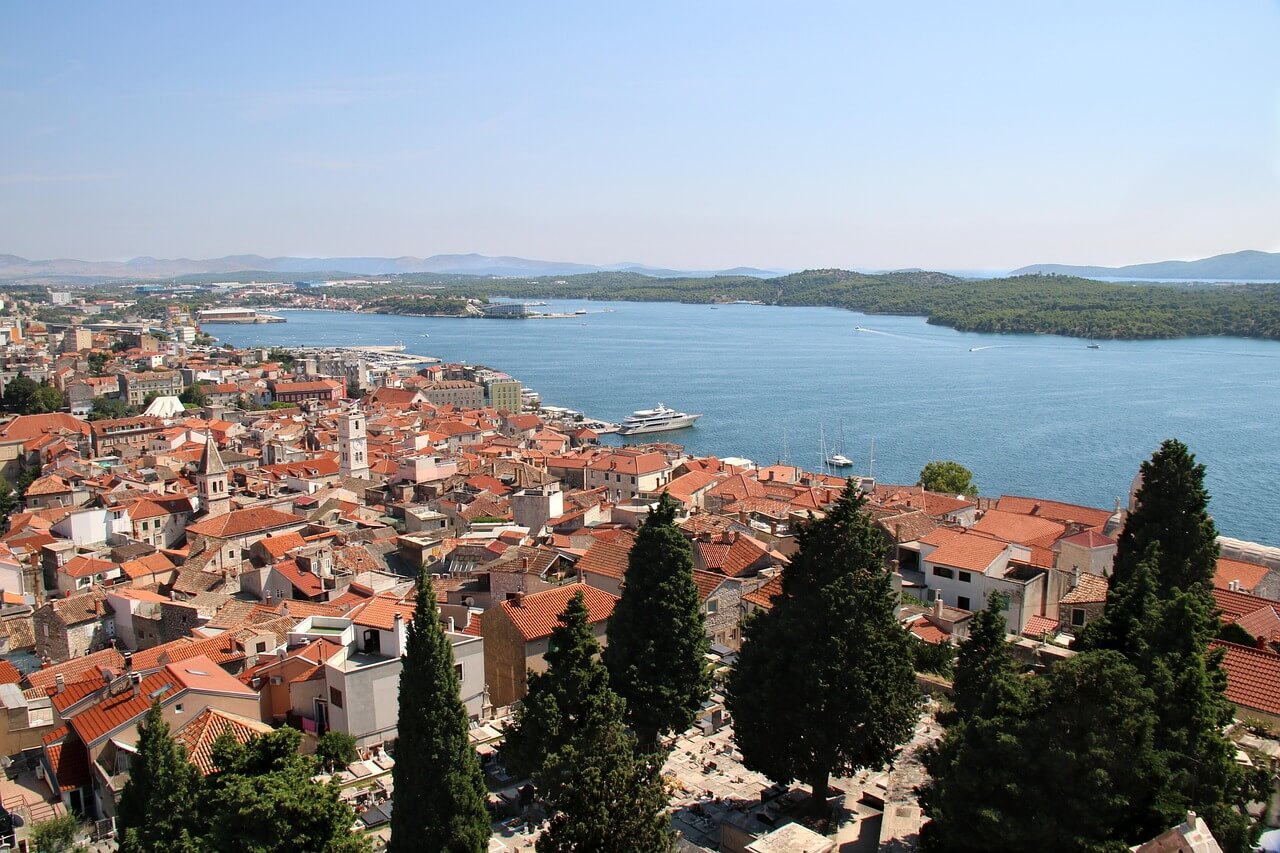
Šibenik is one of those Croatian cities that can surprise you from the very first moment you walk in. It’s not as obvious as Split or Dubrovnik, yet it offers everything you’d expect from a successful Dalmatian vacation – a historic old town, impressive fortresses, beautiful views of the Adriatic Sea, beaches, excellent cuisine, and the possibility of organizing interesting excursions in the surrounding area.
Located on the Adriatic Sea, at the mouth of the Krka River, Šibenik is also an excellent base for trips to Krka National Park, the islands of the Šibenik archipelago, and Kornati National Park. The city itself is compact enough to explore the most important attractions on foot.
What’s worth seeing in Šibenik? How much does a day here cost? Where to try local cuisine and how to budget for your vacation? Let’s find out.
Šibenik – a city with over a thousand years of history
Šibenik boasts a history spanning over a thousand years. The city was first mentioned on Christmas Day in 1066 in a document related to the Croatian King Petar Krešimir IV. For this reason, Šibenik is also known as “Krešimir’s Town.” According to the city’s tourist organization, it is the oldest native Croatian town on the Adriatic coast. It received city rights in 1169.
However, the city’s history was not peaceful. In 1412, Šibenik fell under the rule of the Republic of Venice. Its location on the Adriatic Sea made it an important strategic point and port, so its fortification system was developed over the following centuries.
A particularly crucial period was the wars with the Ottoman Empire. In the 17th century, Šibenik had to prepare for further attacks, resulting in the construction of fortresses such as St. John and Barone. In 1647, the city survived the largest Ottoman attack on Šibenik.
Over the centuries, the city has also been plagued by epidemics and economic crises. The plague epidemic in the 16th century was particularly devastating, leading to a significant decline in the city’s population and a long-term decline.
Today, the city’s turbulent past is primarily remembered by its stone streets, palaces, churches, and massive fortifications towering over the Old Town.
Old Town – the best way to get to know Šibenik
It’s best to start exploring Šibenik from the Old Town. Narrow stone streets, staircases, small squares, and buildings dating back to the Venetian Republic create a unique atmosphere.
Unlike some larger Croatian cities, Šibenik doesn’t feel like a vast open-air museum. It’s more intimate and allows for leisurely strolls without the need for a car.
It’s worth simply getting lost in the streets of the Old Town. Along the way, you’ll discover small cafés, restaurants, galleries, shops selling local produce, and hidden courtyards.
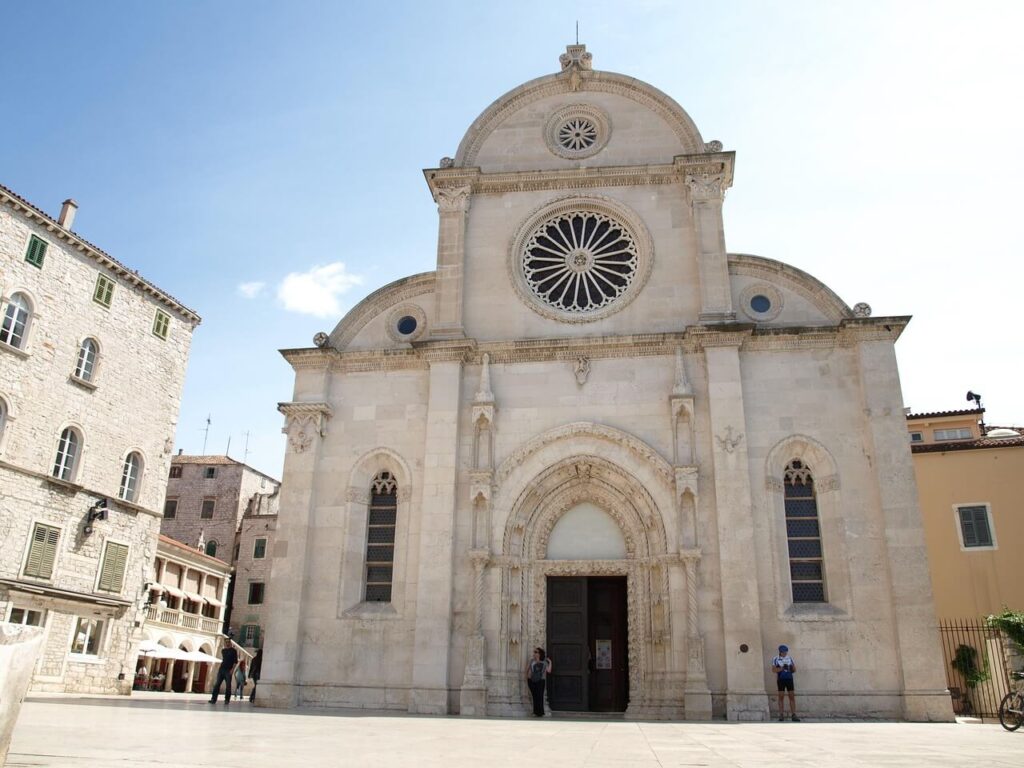
One of the highlights is, of course, the square in front of St. James’ Cathedral.
St. James’s Cathedral – a symbol of Šibenik and a UNESCO World Heritage Site
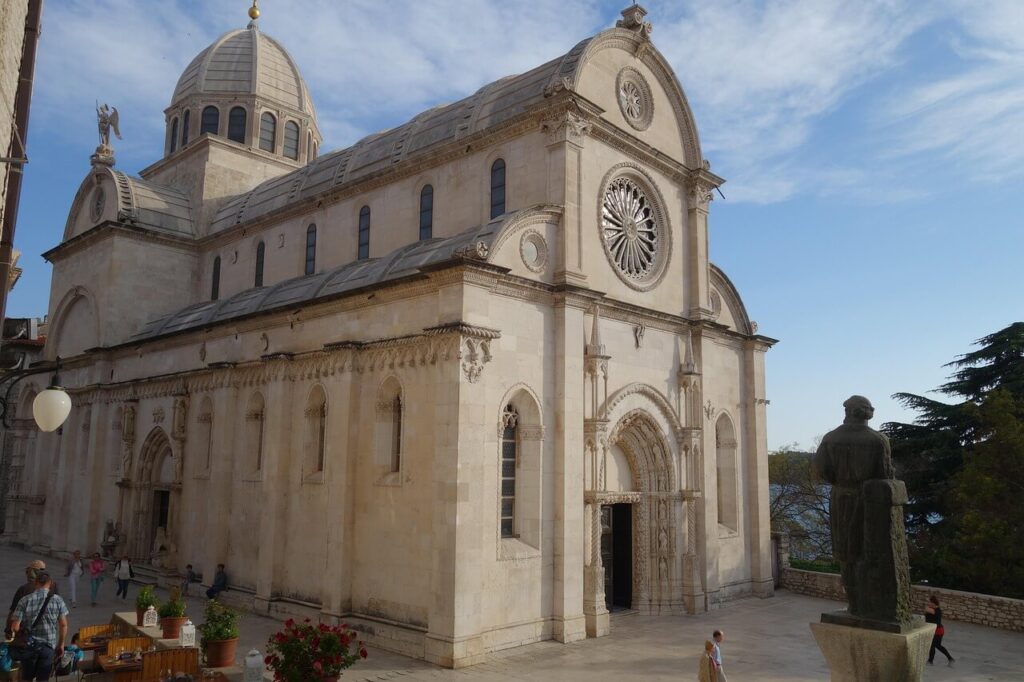
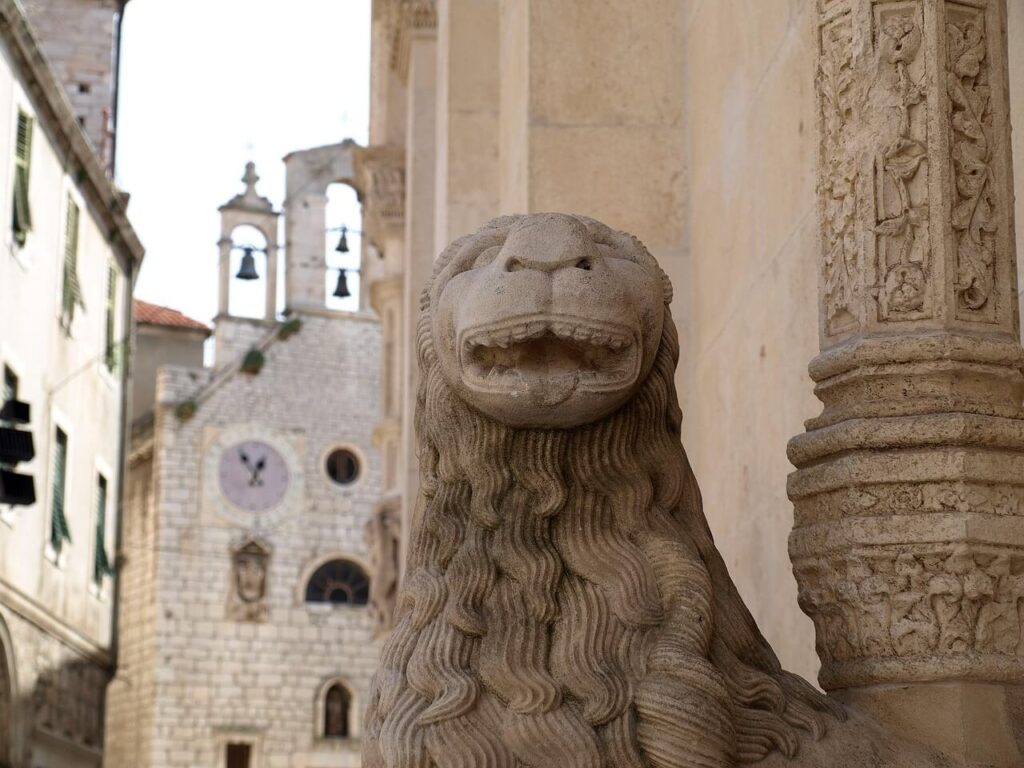
The Cathedral of St. James is undoubtedly the most important monument in Šibenik. It was designated a UNESCO World Heritage Site in 2000. Construction began in 1431 and took over a century to complete.
This building is unique not only for its appearance but also for its construction. The cathedral was built entirely of stone, avoiding the traditional use of brick. It combines Gothic and Renaissance elements, and its design was influenced by northern Italy, Tuscany, and Dalmatia.
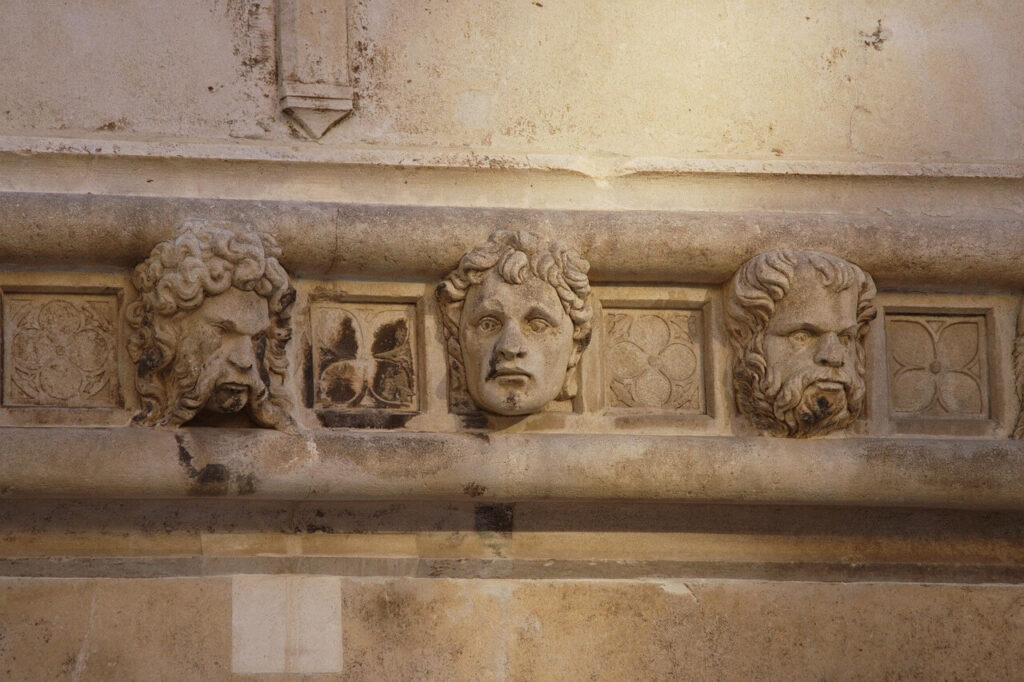
The distinctive dome and the frieze on the exterior of the building, featuring 71 stone heads representing men, women, and children, are particularly noteworthy. To this day, it is unclear who exactly each sculpture represents.
According to the city’s tourist office, admission to the cathedral costs approximately €3. However, it is worth checking the current price list and opening hours before visiting, as information regarding religious monuments may change seasonally.
Gallery of St. James’s Cathedral
St. Michael’s Fortress – the best view of Šibenik
If you want to see Šibenik from above, be sure to visit St. Michael’s Fortress. It sits on a steep, rocky hill above the city and offers panoramic views of the old town, the Adriatic Sea, and the islands of the Šibenik archipelago.
For centuries, the fortress was one of the most important elements of the city’s defense system. Recently restored, it also serves as a unique concert venue. It features an outdoor stage where musical events are held.
During the season from March 26 to October 31, 2026, an adult ticket costs €11.50. A combined ticket covering the city’s three fortresses – St. Michael’s, St. Barone’s, and St. John’s – costs €15. For youth aged 7-18, the combined ticket is €8.50.
This is a prime example of an attraction worth spending money on. Besides the history, it offers one of the best viewpoints in the city.
Barone Fortress and St. John’s Fortress
Šibenik boasts four important fortifications. In addition to St. Michael’s Fortress, Barone Fortress and St. John’s Fortress are worth visiting.
Barone Fortress was built in the 17th century as part of the city’s defense system. Today, tours are enhanced with modern multimedia solutions, making the history of the fortifications even more engaging for children.
St. John’s Fortress is the largest and highest fort in Šibenik. It was built in 1646 on a hill approximately 120 meters above the old town. Together with Barone Fortress, it was built in just 58 days because residents had to quickly prepare for an anticipated Ottoman attack.
Admission to Barone Fortress and St. John’s Fortress is included in the same price list. For the 2026 season, a single adult ticket costs €11.50, while the most cost-effective option is a combined ticket for €15 for the three forts.
Fortress of St. Nicholas – the sea gate of Šibenik
The fourth fortification is the Fortress of St. Nicholas, located at the entrance to the Canal of St. Anthony. It is an exceptional example of Venetian military architecture from the 16th century.
Construction of the fortress began in 1540 after the threat from the Ottoman Empire necessitated the strengthening of Šibenik’s defenses. The fortress was built on a small island and was intended to protect access to the important port.
In 2017, it was added to the UNESCO World Heritage List as part of the system of Venetian defensive fortifications from the 16th and 17th centuries.
A visit to the fortress can be combined with a walk along the Canal of St. Anthony. This is an excellent option for those seeking to combine history with nature.

Are you interested in buying or renting property in Croatia?
We invite you to cooperate with the professional Nestovia Real Estate Agency!
What else is worth seeing in Šibenik?
The city center itself can be explored without significant expense. Walking through the Old Town is free, as is viewing the exteriors of many historic buildings and churches.
Notable attractions include:
- Republic of Croatia Square in front of the cathedral,
- palaces and townhouses of the former nobility,
- the medieval streets of the old town,
- the Riva promenade,
- the city churches,
- the harbor area,
- St. Anthony’s Canal,
- Banj Beach with a view of the historic center.
Another good idea is to purchase a Šibenik Card. This tourist card can include free admission to attractions such as St. James’ Cathedral, the City Museum, the Civitas Sacra Interpretive Center, and three of the city’s fortresses, as well as discounts on selected attractions and services.
How much does it cost to spend a day in Šibenik?
Šibenik is no longer the cheapest destination on the Croatian coast, especially during peak season. At the same time, you can spend a day here relatively inexpensively if, instead of dining on the Riva itself, you choose a place a bit further from the main attractions.
A rough budget for one day might look like this:
Economy option – around 25–40 euros per person:
- Coffee – about 2–3 euros,
- Quick lunch – about 8–12 euros,
- Dinner at an inexpensive konoba – about 12–20 euros,
- A city walk and some attractions are free.
Comfort option – around 50–80 euros per person:
- Breakfast – approximately 7–12 euros,
- Coffee and a drink – 4–7 euros,
- Lunch – approximately 15–25 euros,
- Entrance to the fortress – 11.50 euros,
- Dinner or a drink – 15–25 euros.
If you plan to visit several paid attractions, it is worth considering a tourist card or a combined ticket for the fortresses.
What to eat in Šibenik?
Šibenik cuisine is primarily Dalmatian. Fresh fish, seafood, olive oil, vegetables, herbs, cheeses, and local meats predominate.
During your stay, you should especially try:
Brudet – a thick fish stew made with several types of fish, often served with polenta.
Crni rižot – black risotto with squid ink. This is one of the most characteristic dishes of the Croatian coast.
Grilled fish – most often bream, sea bass, sardines, or other fresh fish.
Octopus – can appear in a salad, as a grilled dish, or prepared under a peka.
Pašticada – long-braised beef in an aromatic sauce, usually served with dumplings.
Pršut and local cheeses – excellent as an appetizer with a glass of Croatian wine.
The local wines are also worth checking out. In the Šibenik region, the Babić and Maraština grape varieties are popular, among others.
Where to eat well in Šibenik?
One interesting place is Konoba Marenda, located in the historic center. It’s a great option for those looking for simpler, more home-style cuisine. It offers traditional Croatian and Mediterranean dishes, and according to current reviews, prices range from €15-25 per person.
Knoba Nostalgija is also worth checking out. This popular spot specializes in fish, seafood, risotto, and meat dishes, among other things. Visitor reviews often highlight the use of local produce and the traditional character of the cuisine.
For a more unique dinner, consider Pelegrini. The restaurant is located in the heart of Šibenik, next to St. James’ Cathedral, in the historic Villa Pelegrini-Tambača. Its cuisine is based on local produce, but traditional flavors are interpreted in a modern way. The restaurant, which holds a Michelin star, is one of the most exclusive dining options in the city, so its prices are significantly higher than those of a typical konoba.
If value for money is key, it’s worth seeking out small taverns a few streets away from the main tourist squares. Local experience suggests that you can find more affordable dishes there than in establishments located directly on the Riva.
Šibenik as a base
One of the city’s greatest advantages is its location. From Šibenik, you can organize excursions to Krka National Park, famous for its waterfalls and beautiful landscapes. Another destination is the Kornati Islands – a unique archipelago of islands, islets, and reefs.
The region boasts 242 islands, islets, and reefs, and Šibenik itself lies near two national parks – Krka and Kornati.
You can therefore plan your stay so that you dedicate one day to exploring the old town, the second to the fortresses, the third to Krka National Park, and the third to a cruise on the Adriatic Sea.
Is Šibenik worth visiting?
Absolutely. Šibenik is a great option for those who want to combine a seaside vacation with sightseeing and learning about Croatian history.
The city’s greatest asset is its diversity. In a single day, you can stroll through medieval streets, admire the UNESCO-listed cathedral, climb a 16th- or 17th-century fortress, relax on the beach, sip coffee overlooking the Adriatic, and in the evening enjoy fresh fish or traditional Dalmatian risotto.
Importantly, Šibenik is also a great base for exploring a wider section of the Croatian coast. Its proximity to Krka, Kornati, numerous islands, and smaller towns makes it a great place to spend both a short weekend and a full-blown vacation.
If you’re looking for a place in Croatia that’s more intimate than Dubrovnik, yet still offers a wealth of history, monuments, beautiful views, and local cuisine, Šibenik should definitely be on your list.
It’s worth remembering that the prices listed in the article are approximate and reflect the realities of the 2026 season. During the peak summer season, prices for restaurants, tours, and some attractions may be higher, so it’s a good idea to check the current price lists for specific places before visiting.
