
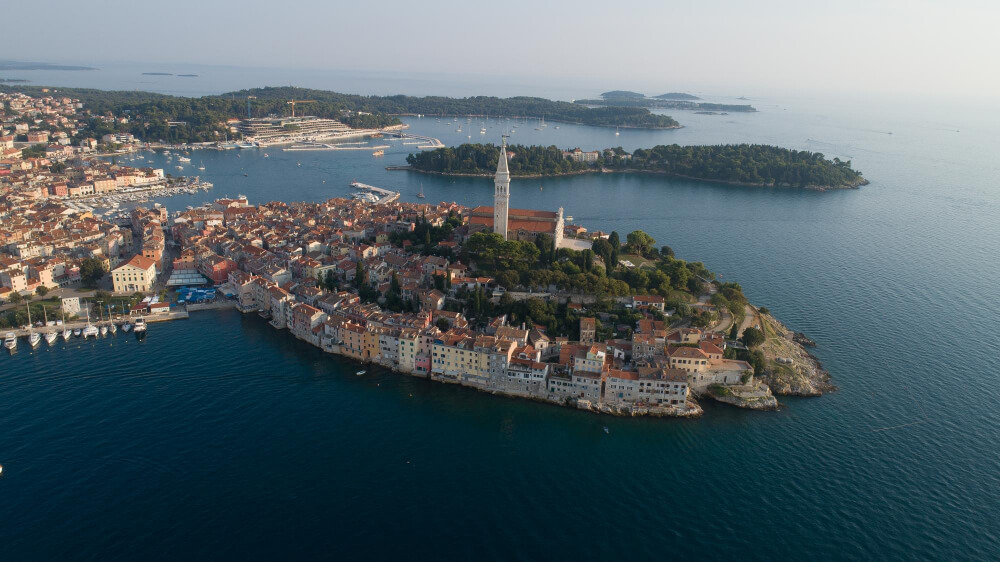
Rovinj is a charming town on the northwestern coast of Croatia, in the region of Istria. Situated on a picturesque peninsula that was essentially a separate island until the 18th century, Rovinj captivates tourists with its Mediterranean atmosphere, historical heritage, and vibrant culture. It’s no wonder it’s often compared to a miniature Venice—though it lacks canals, its narrow streets, pastel-colored facades, and port atmosphere evoke a serene, sunny version of Italian life.
History – from ancient times to the present day
Rovinj’s history dates back to Roman times. As early as the 3rd century BC, a Roman settlement known as Arupinium existed here, documenting its long and rich past. Over the centuries, Rovinj developed into an important fishing and trading port, gaining particular importance during the rule of the Venetian Republic between the 13th and 18th centuries. It was during this period that the city acquired its distinctive style—Venetian influences are evident in its architecture, urban planning, and local culture, earning it the nickname “Little Venice.”
In 1963, the entire historic center—the old town—was declared a cultural monument, prompting its meticulous preservation and restoration. Today, strolling through its narrow, cobblestone streets feels like a step back in time.
The Old Town – the heart of Rovinj
Rovinj’s Old Town is a maze of narrow streets, stairways, and hidden squares and alleys. Once surrounded by defensive walls, it was originally an island, connected to the mainland only in the 19th century. As a result, its urban plan has remained virtually intact over the centuries.
Balbi’s Arch – a gateway to the past
One of the most distinctive entrance points to the old town is Balbi’s Arch, a historic 17th-century city gate that leads directly into the labyrinth of stone streets. The arch features two distinctive details: carved heads—a Turkish and a Venetian—symbolizing the region’s past influences and cultural exchanges.
Streets, squares and atmosphere
After crossing Balbi’s Arch, visitors are greeted by historic buildings with pastel facades, cafes with umbrellas shading their tables, and gallery shops and studios of local artists. One such street is Grisia, known as the Street of Artists, full of galleries, workshops, and open-air galleries, which come to life especially in August during the open-air art festival.
Rovinj Icons: Church of Saint Euphemia
It’s impossible to mention Rovinj without its most important landmark – the Church of St. Euphemia. This Baroque church, built in the 18th century, dominates a hill above the old town. Its soaring roof – modeled after the bell tower of St. Mark’s Basilica in Venice – attracts attention from afar.
The relics of the city’s patron saint, St. Euphemia, are enshrined in a precious 6th-century sarcophagus. According to legend, their arrival is connected to a miraculous event at sea and the salvation of fishermen, which gave this place a unique sacral and cultural significance.
The church tower offers a breathtaking panorama of the Adriatic Sea and the vast archipelago of islets around Rovinj, making it one of the most beautiful views in all of Istria.
Rovinj and its archipelago – nature and beaches
Rovinj boasts not only architecture and history, but also a beautiful coastline and 19 charming islands scattered along its shores. This archipelago delights with clear waters, havens for sailors, unspoiled beaches, and a natural charm that’s hard to forget.
Crveni Otok – red islands
One of the most popular destinations for boat or kayak trips is Crveni Otok – two connected islands that offer picturesque walking paths, charming bays, and peace and quiet away from the hustle and bustle of the city.
Zlatni Rt – Golden Cape
South of the city lies the vast Punta Corrente Forest Park, also known as Zlatni Rt (Golden Cape). It’s an ideal place for walks, picnics, jogging, and cycling among pine forests and rocky bays.
Along the coast, you’ll find dozens of beaches—from rocky coves to sandy stretches of ocean—that are Blue Flag certified, a testament to their high quality and environmental friendliness.
Rovinj City Gallery


Culture, museums and traditions
Rovinj is also a center of culture and local tradition. The city offers numerous museums and galleries that allow you to explore its centuries-old history and the artistic spirit of its inhabitants.
Batana Eco-Museum
One of the most interesting places is the Batana Eco-Museum – a unique museum dedicated to the traditional, flat-bottomed batana boat, which has served fishermen for centuries in the harsh Adriatic. The exhibition showcases boat-building techniques, fishing tools, and stories from local communities.
City Museum
In the very center of town stands the Rovinj City Museum, housed in a Baroque palace, where you can see rich collections relating to the history of the city, art and the Istrian region.
Outdoor Activities – From Water to Land
Rovinj is a paradise for lovers of active holidays:
- Kayaking and paddleboarding – equipment rentals are available at the port, and a trip around the islands and coast of Rovinj is an unforgettable experience.
- Diving and snorkeling – the crystal-clear waters of the Adriatic Sea are perfect for underwater exploration, including shipwrecks and abundant marine life.
- Cycling trails – local paths lead through pine forests, lavender fields, and vineyards.
Cuisine and local flavors
The Istrian region is renowned for its exceptional cuisine, which reaches true culinary heights in Rovinja. Fresh seafood, olive oil, local wines (Malvasia, Teran), and aromatic truffles are just the beginning.
In recent years, the city has become a true culinary hotspot in Europe—Rovinja boasts several Michelin-starred restaurants, many located right on the waterfront or in the historic center, combining local ingredients with modern culinary art.

Are you interested in buying or renting property in Croatia?
We invite you to cooperate with the professional Nestovia Real Estate Agency!
Events and festivals – the city’s cultural life
Rovinj is especially vibrant during the summer season. Music festivals, open-air exhibitions, traditional boat regattas, and culinary events attract tourists from all over the world.
Why is it worth visiting Rovinj?
Rovinj is not just beautiful photos and picturesque streets, but a place where history harmoniously intertwines with nature, culture, and contemporary lifestyle. It’s the perfect destination for:
- Lovers of history and architecture,
- foodies and wine enthusiasts,
- people seeking relaxation by the sea,
- artists and photographers,
- those who want to experience the true atmosphere of the Adriatic.
Summary
Rovinj is a city that captivates from the first glance—with its extraordinary old town structure, monumental basilica, the vibrant colors of the Adriatic, and the rich flavors and aromas of the region. It’s a place that remembers ancient times while simultaneously living to the fullest in modern Europe, offering visitors something more than a typical vacation—a true experience of culture and nature.
